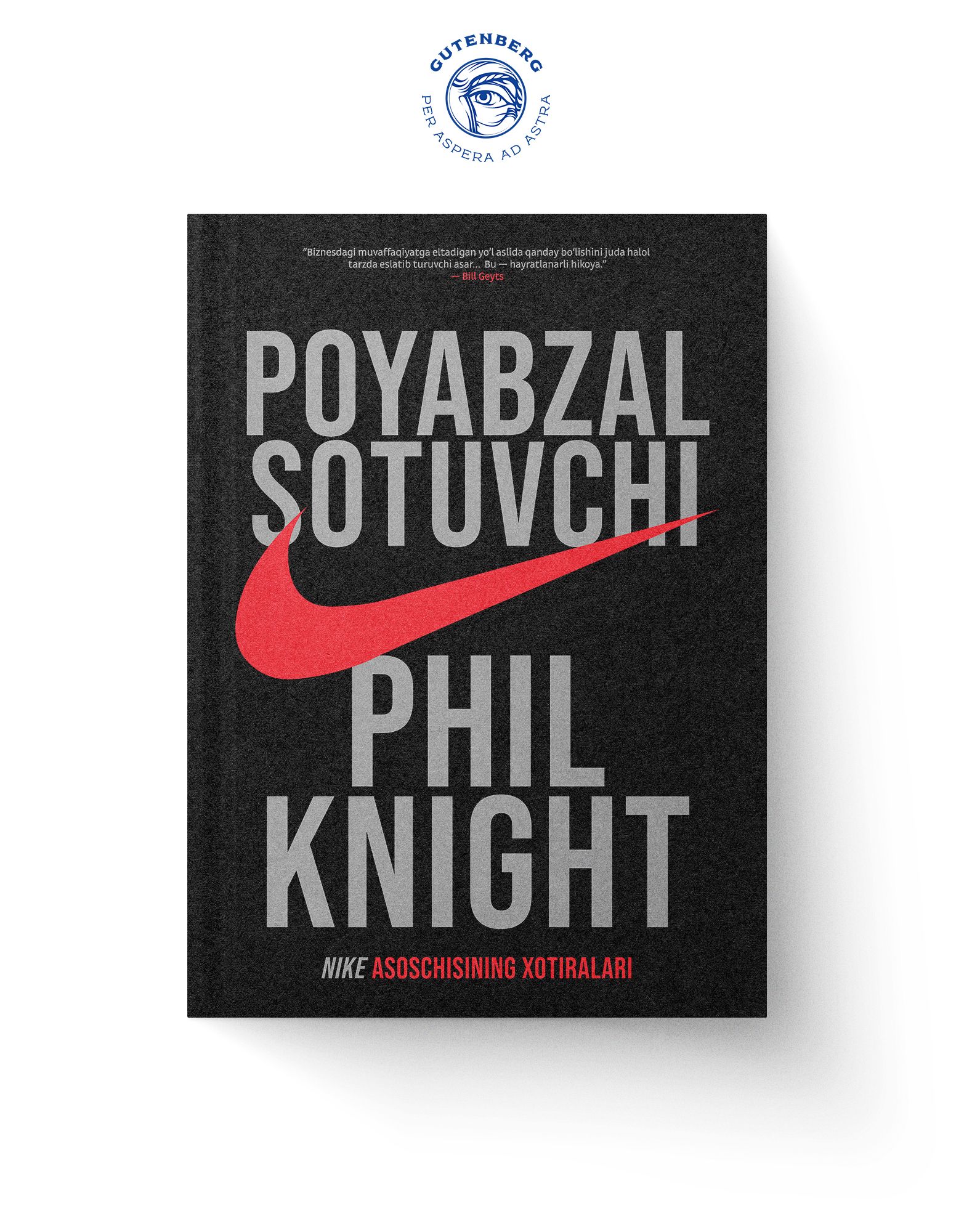
Phil Knight's Shoe Dog is a candid and gripping memoir detailing the formative history of the world-renowned Nike brand from 1962 to 1980. The book is not merely a success story; it lays bare the reality behind crushing debts, legal battles, and relentless hard work. Below is a detailed summary of the book's core content:
1. The "Crazy Idea" and the Beginning (1962–1964)
It all began in 1962 when 24-year-old Phil Knight was studying at Stanford University. His "Crazy Idea" was that cheap, high-quality running shoes manufactured in Japan could disrupt the American market, which was then dominated by German brands Adidas and Puma.
The First Step: Phil Knight borrowed $50 from his father and set off on a trip around the world. In Japan, he met with executives from the Onitsuka company and introduced himself as the head of Blue Ribbon Sports—a company that did not yet exist.
The First Sale: When the first shipment of products arrived in 1964, he began selling the shoes at track meets right out of the trunk of his Plymouth Valiant.
2. The Legendary Team: "The Buttfaces"
Phil Knight surrounded himself not just with employees, but with slightly eccentric individuals who were deeply devoted to the vision. They jokingly referred to themselves as "The Buttfaces":
Bill Bowerman: Phil Knight's former track coach and Nike co-founder. He was constantly looking for ways to lighten and improve running shoes.
Jeff Johnson: The company's first full-time employee. It was he who saw Nike, the Greek goddess of victory, in a dream and suggested naming the brand after her.
Bob Woodell: A former runner who was paralyzed from the waist down, he managed the company's day-to-day operations.
Delbert Hayes: A somewhat gruff but brilliant accountant who understood numbers at the level of an art form.
3. The Birth of the Nike Brand (1971)
When relations with Onitsuka soured, Phil Knight decided to create his own brand.
The Logo: The famous "Swoosh" logo was designed by Carolyn Davidson, a student at Portland State University, for a mere $35. Knight initially didn't love it but accepted it, saying, "I don't love it, but perhaps it will grow on me."
The Innovation: One morning at breakfast, while looking at his wife's waffle iron, Bowerman came up with the idea of making a shoe sole with that exact pattern. This led to the creation of the famous "Waffle Trainer."
4. Hardships and Triumphs
The company was almost constantly on the brink of bankruptcy.
Financial Crisis: Fearing the company's rapid growth, American banks refused to extend loans. During this critical time, the Japanese trading house Nissho Iwai extended a helping hand.
The Battle with the Government: In 1977, the US Customs Service unexpectedly slapped Nike with a $25 million bill for retroactive duties. Phil Knight and his team fought this injustice to the bitter end and succeeded in lowering the penalty to $9 million.
Prefontaine: Phil Knight backed the legendary runner Steve Prefontaine, who became the spirit and symbol of the brand.
5. The Turning Point of 1980
For a long time, Phil Knight resisted taking the company public (IPO) because he didn't want to lose control. However, this step was essential for the company's growth. On December 2, 1980, Nike went public, and Phil Knight's net worth soared to $178 million that very day.
Conclusion: The primary lesson of the book is that business is not just about making a profit; it is about defending the values you believe in and never stopping. In the words of Phil Knight: "The cowards never started and the weak died along the way—that leaves us."
The Analogy: The rise of Nike is like a marathoner running through a thick fog. He doesn't know where the finish line is, nor can he see the thorns and rocks beneath his feet, but he knows only one thing: he must keep moving.